
The Pirelli skyscraper in Milan is one of the most significant engineering and architectural works of twentieth-century Italy. Commissioned by the Pirelli company, from which it takes its name, the building was designed by architect Giò Ponti with the collaboration of Pier Luigi Nervi and Arturo Danusso, among the leading figures of twentieth-century Italian engineering.

Fig. 1 – Pirelli skyscraper, Milan.
More than sixty years after its construction, a comprehensive assessment of the structure’s dynamic condition was undertaken. In this context, Moni2BSafe was commissioned to carry out a dynamic identification campaign, aimed at characterizing the building’s behavior and deriving the parameters needed to calibrate increasingly accurate and reliable calculation models.
The work was carried out using accelerometers, instruments capable of detecting the accelerations and ambient vibrations to which the structure is subjected. Analysis of the acquired signals makes it possible to identify the building’s main dynamic characteristics, including natural frequencies, mode shapes, and response to external forces.
The Pirelli skyscraper reaches a height of about 120 meters and has a longitudinal extent of about 70 meters. To obtain a meaningful representation of the structure’s overall behavior, monitoring covered 11 floors, with at least three accelerometers placed on each floor where possible.
In total, 40 traditional accelerometers and 8 Wi-Fi accelerometers, designed and built by the Moni2BSafe team, were used. Combining the two technologies made it possible to directly compare the performance of conventional instrumentation with that of the wireless devices developed in-house.
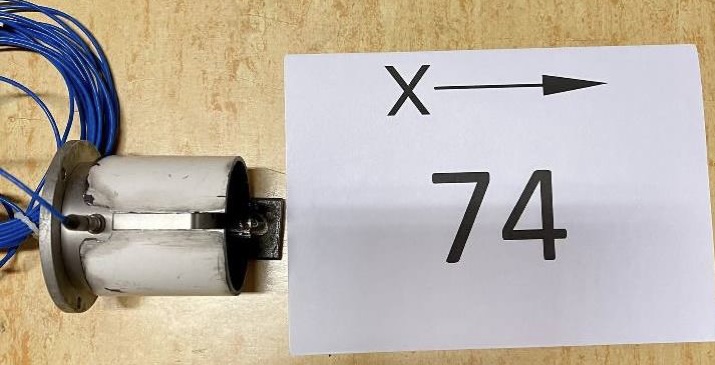
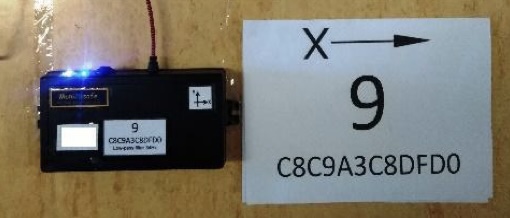
Fig. 2 – Left, traditional accelerometer; right, Wi-Fi accelerometer Moni2BSafe.
The measurement campaign was organized into several sessions, needed to address the difficulties caused by the low amplitude of the ambient vibrations and the presence of electrical noise in the detection system. Through careful processing and analysis of the acquired signals, it was possible to accurately extract the structure’s main dynamic parameters, using both the traditional instrumentation and the Wi-Fi system developed by Moni2BSafe.
The results obtained confirmed the reliability of the monitoring system and, in particular, the good performance of the Wi-Fi accelerometers, which showed a response consistent with that of the traditional instrumentation while keeping a low cost and greater ease of installation.
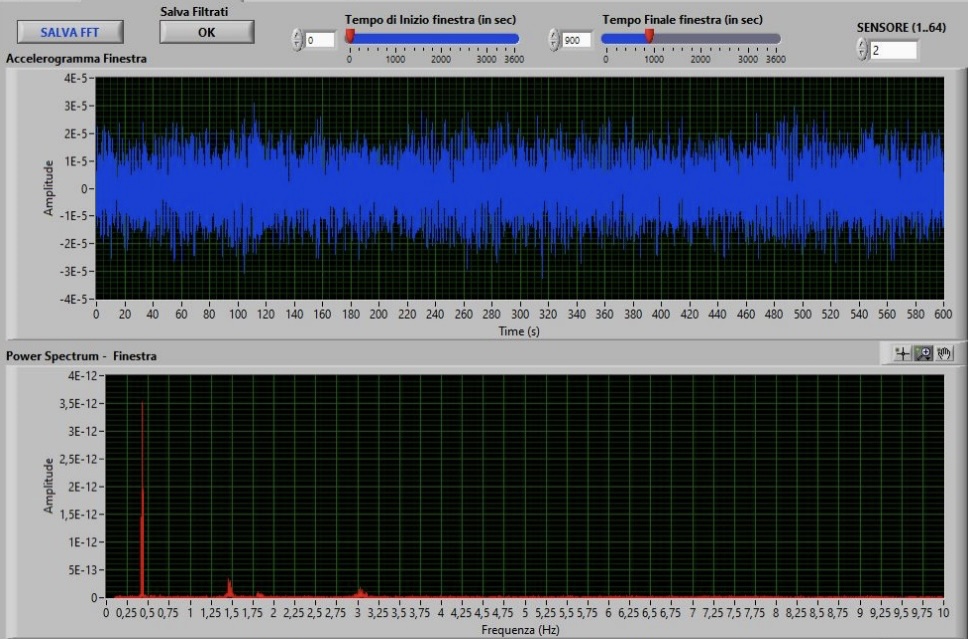
Fig. 3 – Background vibrations recorded by the accelerometers.
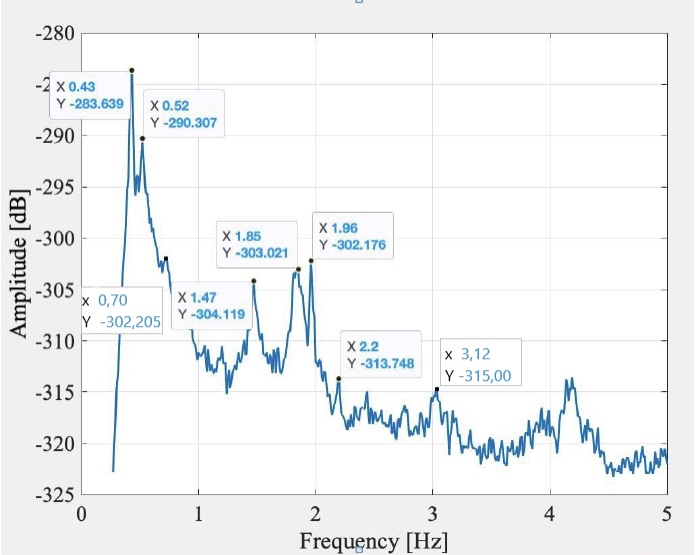
Fig. 4 – Results of the analysis of the recorded signals.
The data analysis made it possible to derive the main dynamic parameters of the Pirelli skyscraper, providing an essential technical basis for building and calibrating a computational structural model capable of accurately reproducing the building’s behavior.
Experimental knowledge of the structure’s dynamic characteristics is a highly valuable asset for supporting future assessment, maintenance, and conservation activities on a work of such historical and engineering importance.
The campaign carried out on the Pirelli skyscraper also confirms the effectiveness of the integrated approach developed by Moni2BSafe, which combines traditional sensors and remotely controlled Wi-Fi devices for the dynamic monitoring of complex, high-value engineering structures.